Politics
Chicago Faces $982M Budget Shortfall in 2025, $223M Gap in 2024: Johnson
 (Michael Izquierdo / WTTW News)
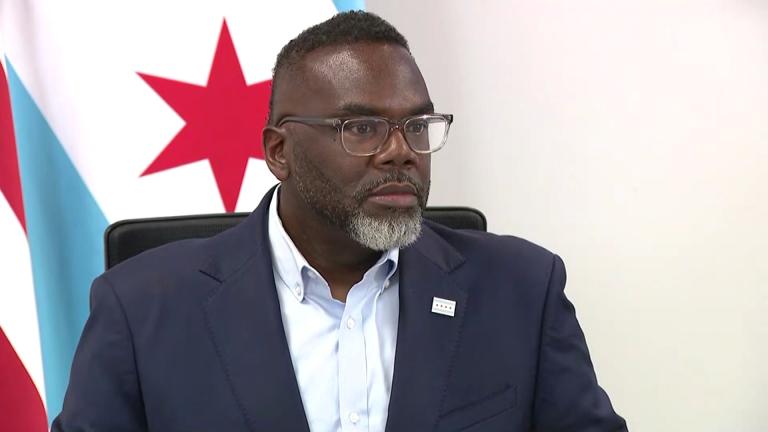
Saying Chicago faces “significant and substantial” challenges, Mayor Brandon Johnson painted a dire financial picture for the city late Wednesday, detailing a projected $982.4 million budget shortfall in the 2025 fiscal year.
On top of that colossal shortfall, the city’s budget for the current year is deep in the red because of lower-than-expected corporate tax revenues and the decision by leaders of the Chicago Public Schools not to make a $175 million payment to its employee pension fund. The city must fill a $222.9 million deficit by the end of the year, officials said.
“There are sacrifices that will be made,” said Johnson, vowing to minimize the “impact on city services, programs and of course our workforce that play such a critical role in building, strengthening our economy.”
Chicago is confronting its largest budget deficits since 2021, the height of the COVID-19 pandemic that triggered an economic catastrophe. The projected budget gap for 2025 is more than 80% larger than the gap Johnson faced during his first year in office.
Johnson depicted the city’s current financial woes as the result of decades of mismanagement by his predecessors.
“There has been real, severe damage that has occurred over time,” Johnson said.
Read the full budget forecast here.
Chicago’s financial picture has been buoyed in recent years by the city’s red-hot real estate market, a faster-than-anticipated recovery from the depths of the COVID-19 pandemic and nearly $2 billion in federal aid designed to help the city weather the pandemic.
However, that post-pandemic boom appears to be over, in part because of the fast rate of inflation and efforts by federal banking officials to combat that surge by raising interest rates, Chief Financial Officer Jill Jaworski said.
Johnson declined to discuss specifically how he planned to fill the gap looming in 2025, but said he remains committed to finding “long-term sustainable solutions that speak to the interests of working people.”
The projected gap is in line with estimates released a year ago and is more evidence that Chicago’s finances remain out of whack, pinched by soaring pension costs, spiraling personnel costs and a massive amount of debt, Johnson said.
Vowing to find structural solutions to that imbalance, Johnson did not immediately rule out a property tax hike, as he did when he unveiled the projected $538 million budget shortfall the city confronted in 2024.
Johnson campaigned on a promise not to raise Chicagoans’ property taxes, the city’s largest source of revenue and the most effective way for city officials to raise revenue and ensure expenses do not outstrip costs.
Johnson reversed former Mayor Lori Lightfoot’s deeply unpopular plan to automatically hike property taxes to keep pace with inflation after campaigning against it.
Budget Director Annette Guzman said the city may need to hold off on hiring new employees or impose a hiring freeze to stanch the flow of red ink through the end of the year, when the city’s finances must be in the black.
Both Guzman and Johnson repeatedly stressed the unanticipated deficit the city is facing this year is almost entirely due to the decision by the members of the Chicago Board of Education, who were appointed by Johnson, not to contribute $175 million to the pensions of employees who are not teachers.
CPS has made that payment since 2020, but declined to do so this year, as it grappled with a $505 million deficit of its own.
Chicago voters will elect the first members of a new Chicago Board of Education in November, beginning its transition from mayoral control.
“CPS will soon be treated like every other school district in the state,” said Johnson, a former teacher and Chicago Teachers Union organizer. “They are required to make this payment. These are their workers.”
The city faces a deficit this year even though it spent approximately $200 million less than anticipated, Guzman said.
Johnson and the Chicago City Council now face a series of tough decisions by the end of the year, making his efforts to fund new investments designed to boost working-class Chicagoans, particularly on the West and South sides, much more difficult.
Johnson has yet to fulfill his promises to increase the amount of money flowing into the city’s coffers and use that new revenue to invest in Chicagoans, and that effort suffered a significant setback when Chicago voters rejected the proposal known as Bring Chicago Home, which would have given the City Council the power to hike the Real Estate Transfer Tax on property sales over $1 million to help fund efforts to fight homelessness.
A City Council committee charged by Johnson with examining the dozens of proposals to increase the amount of money officials have on hand to spend has met just once since being formed a year ago, and has yet to make any proposals.
At the same time, the city’s expenses continue to grow.
The city faces a $2.85 billion pension bill in 2025, according to city records, in order to comply with a state law that requires two of Chicago’s funds be funded at a 90% level by 2055 and the other two by 2058, ensuring they can pay benefits to employees as they retire.
The budget projections include an additional payment to the city’s four pension funds of $272 million for the third year in a row. That will prevent the “further growth of the city’s unfunded pension liabilities,” officials said.
In addition, the budget projections anticipate spending $150 million to cover the cost of housing, feeding and caring for the men, women and children sent to Chicago from the southern border in 2025. Chicago taxpayers are on track to spend at least $220 million in 2024 to care for the migrants.
City officials said they have also set aside funds in anticipation of reaching a new labor agreement with Chicago firefighters, who have been working without a contract for three years. Guzman declined to detail how much the city had budgeted, citing ongoing negotiations.
One issue the city can put off dealing with is the $80 million gap it faces once a state law eliminating the tax on groceries takes effect. That law does not kick in until 2026.
Contact Heather Cherone: @HeatherCherone | (773) 569-1863 | [email protected]